Transportation & Logistics
Dashboard for Heavy Vehicle Company with > 600 in Fleet
The client used a third-party application to manage their day-to-day work. Building dashboards to measure the KPIs (such as machines on the collection, priority tasks, high priority tasks, early warning on delays, etc.) was a manual, time-consuming, and error-prone task. They were looking to automate the entire workflow and needed the data every 30 minutes to be able to effectively manage their process. They were unable to build a view of the drivers’ efficiency, and early warning when prioritized pickups could get delayed. To make matters more difficult they had no internal expertise in technical aspects of the application they were using, making requirements gathering a tricky proposition.
The Challenge
What Was Holding the Business Back?
Manual reporting and limited operational visibility prevented the organization from effectively managing a fleet of over 600 vehicles and responding quickly to operational issues.
Manual Reporting
KPI dashboards were created manually, consuming significant time and increasing the risk of reporting errors.
Delayed Insights
The business required frequent operational updates but lacked an automated process to deliver timely information.
Complex Systems
Limited technical knowledge of the third-party application made requirement analysis and data extraction challenging.
Operational Delays
Without proactive alerts, delayed pickups and high-priority activities could impact operational performance.
Objective
What We Set Out to Achieve
Implement an automated analytics platform that integrates operational data from the client's third-party application, delivers near real-time dashboards, and provides actionable insights into fleet performance, driver efficiency, task prioritization, and operational delays while eliminating manual reporting efforts.
Our Approach & Solution
How We Delivered Results
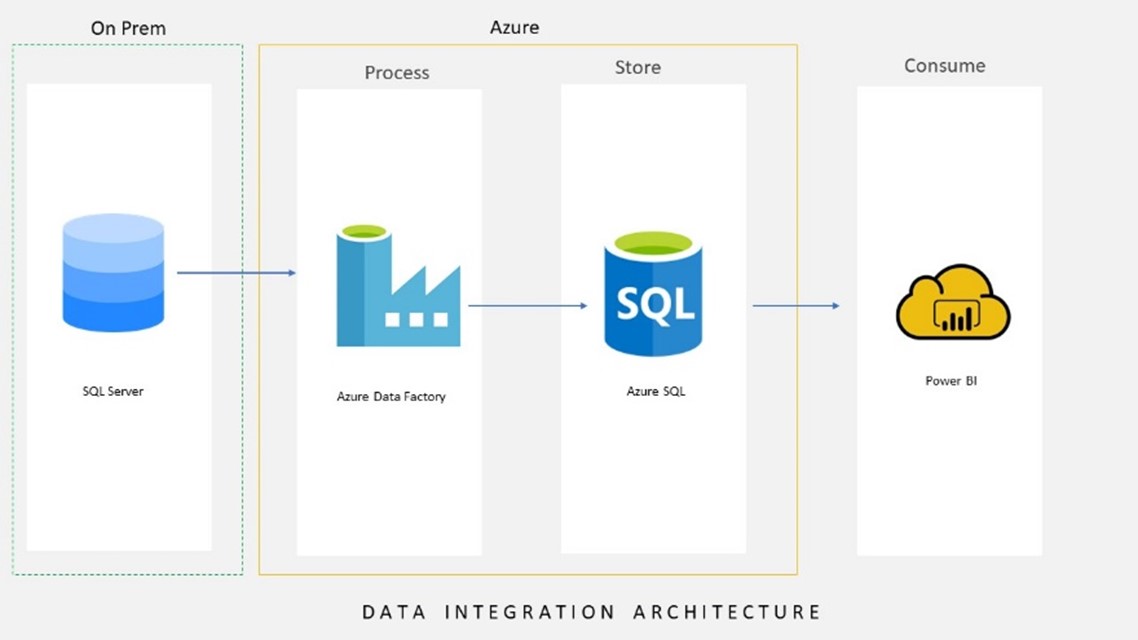
A modern Azure data platform was implemented to automate data extraction, processing, and reporting while delivering near real-time operational insights through Power BI.
01
Process Discovery
Analyzed the third-party application workflows to understand business processes, data structures, and reporting requirements.
02
Data Integration
Built Azure Data Factory pipelines to extract, transform, and process operational data at regular intervals.
03
Centralized Storage
Designed an optimized Azure SQL data model to store processed fleet information for high-performance analytics.
04
Executive Dashboards
Developed interactive Power BI dashboards providing real-time visibility into fleet KPIs, driver performance, and operational alerts.
Near Real-Time
Automated data refresh every 15 minutes, exceeding the required 30-minute operational reporting SLA.
Fleet Insights
Delivered visibility into driver efficiency, task priorities, machine collections, and early warning indicators for delays.
Workflow Automation
Eliminated manual report generation through automated data pipelines and scheduled processing.
Scalable Platform
Built an enterprise-ready architecture capable of supporting large fleet operations and growing business requirements.
Results & Impact
The Outcome
The solution automated fleet reporting, accelerated operational visibility, and enabled proactive management through near real-time analytics.
15 Min
Data Refresh Cycle
2 Hrs
Daily Time Saved
600+
Fleet Monitored
24/7
Operational Visibility
Conclusion
The Bigger Picture
The Azure-powered analytics platform transformed manual fleet reporting into a fully automated, near real-time decision support system. By integrating Azure Data Factory, Azure SQL Database, and Power BI, the organization gained continuous visibility into fleet operations, driver performance, priority tasks, and operational risks. The solution exceeded the required reporting SLA, eliminated hours of manual effort, and established a scalable foundation for efficient fleet management and proactive operational decision-making.
Additional Details
Ready to Transform Your Business with Data?
Connect with our team and let's build your intelligence story.