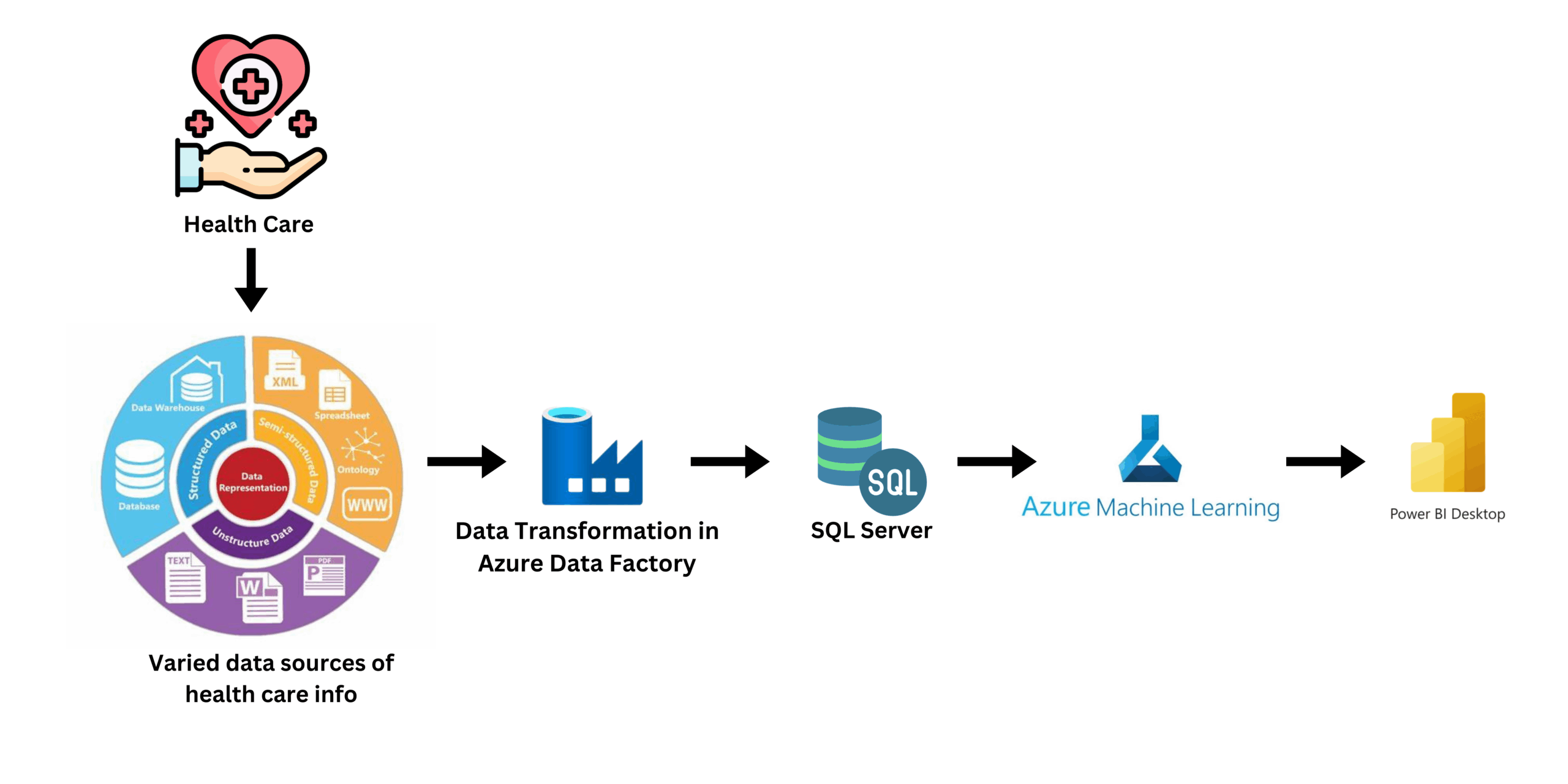
Fabric Implementation on the Health Care System
Healthcare
Healthcare Application Continuity and Disaster Recovery with Microsoft Service Fabric
In the healthcare sector, ensuring the continuity of critical applications and implementing robust disaster recovery measures are paramount. This case study explores how a healthcare organization, HealthCare Dynamics, leveraged various components of Microsoft Service Fabric to enhance real-time analytics, data warehousing, data science, and data engineering for improved application continuity and disaster recovery.
The Challenge
What Was Holding the Business Back?
The healthcare organization required a resilient technology platform capable of supporting uninterrupted healthcare services, advanced analytics, and disaster recovery.
Application Uptime
Critical healthcare applications required high availability to ensure uninterrupted patient services.
Fragmented Data
Healthcare data was distributed across multiple systems, limiting enterprise-wide analytics and reporting.
Disaster Recovery
The organization needed a reliable failover strategy to minimize service disruption during unexpected incidents.
Scalable Analytics
Managing growing healthcare data required scalable infrastructure for analytics, reporting, and predictive insights.
Objective
What We Set Out to Achieve
Build a resilient healthcare platform that ensures continuous application availability, disaster recovery readiness, centralized analytics, and scalable data processing. The objective was to strengthen operational resilience while enabling data-driven healthcare decisions and uninterrupted patient services.
Our Approach & Solution
How We Delivered Results
A Microsoft Service Fabric and Azure-based architecture was implemented to deliver resilient applications, centralized analytics, and enterprise-grade disaster recovery.
01
Analytics Platform
Implemented Power BI, Azure SQL Data Warehouse, and Azure Data Factory to centralize healthcare data and deliver real-time operational insights.
02
AI & Data Science
Leveraged Azure Machine Learning and Azure HDInsight to build predictive models and process large healthcare datasets efficiently.
03
Service Fabric
Deployed microservices on Microsoft Service Fabric with automated scaling, load balancing, and high-availability capabilities.
04
Disaster Recovery
Implemented geo-redundant clusters, Azure Backup, and Azure Site Recovery to ensure rapid failover and business continuity.
Real-Time BI
Delivered interactive dashboards for monitoring patient information, operational metrics, and healthcare performance indicators.
Geo Recovery
Implemented geographically redundant deployments to maintain uninterrupted healthcare services during failures.
Predictive AI
Applied machine learning to support patient outcome prediction, resource planning, and preventive healthcare initiatives.
Data Platform
Built a scalable Azure data ecosystem supporting analytics, orchestration, engineering, and enterprise reporting.
Results & Impact
The Outcome
The solution improved healthcare resilience by enabling continuous operations, intelligent analytics, and enterprise-grade disaster recovery.
24/7
Application Availability
Geo
Disaster Recovery
Instant
Near Real-Time Analytics
Multi
Azure Integration
Conclusion
The Bigger Picture
The Microsoft Service Fabric implementation modernized the healthcare organization's technology landscape by combining high availability, disaster recovery, advanced analytics, and intelligent data processing into a unified platform. Through geo-redundant deployments, automated failover, scalable microservices, and Azure-based analytics services, the solution strengthened operational resilience while ensuring uninterrupted access to critical healthcare applications. The architecture provides a future-ready foundation for delivering reliable, data-driven healthcare services and supporting long-term digital transformation initiatives.
Additional Details
Ready to Transform Your Business with Data?
Connect with our team and let's build your intelligence story.