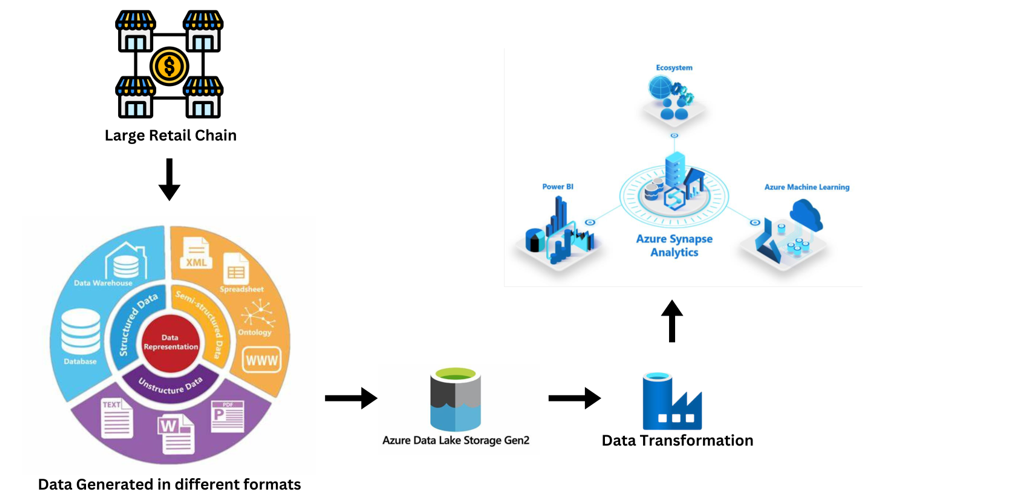
Fabric implementation on Retail Chain
A Large Retail Chain (let's call them RetailCo) with hundreds of stores was struggling with a data nightmare. Sales figures resided in point-of-sale systems, customer information lived in a separate CRM platform, and inventory levels were scattered across countless spreadsheets. This fragmented data landscape made it nearly impossible to get a clear picture of the business. They needed a way to unify their data and unlock its potential – Enter Microsoft Fabric.
The retailer managed critical business information across multiple disconnected systems, making it difficult to generate reliable insights, optimize inventory, and understand customer behavior. The fragmented data landscape resulted in operational inefficiencies and delayed strategic decisions.
Designed an end-to-end Microsoft Fabric architecture that unified enterprise data, automated data integration, enabled real-time analytics, and delivered interactive business intelligence across the organization.
Microsoft Fabric transformed fragmented retail data into a centralized intelligence platform, enabling real-time visibility, improving inventory management, enhancing customer insights, and empowering business leaders with faster, data-driven decision-making.
The Microsoft Fabric implementation successfully eliminated data silos and established a unified retail analytics platform that connected sales, customer, and inventory information into a single source of truth. By combining automated data integration, centralized storage, real-time analytics, and interactive Power BI reporting, the organization improved operational efficiency, strengthened customer intelligence, optimized inventory management, and built a scalable foundation for future digital transformation.
Fabric implementation on Retail Chain